
Discover how Lead Scoring boosts your sales funnel, prioritizes prospects, and increases conversions by 30%.
Have you ever wondered how some companies manage to convert more leads without increasing their marketing budget? The key is knowing how to identify which leads are really worthwhile. This is where lead scoring comes in, a technique that not only improves the efficiency of sales and marketing teams , but also significantly boosts conversion rates .
What is Lead Scoring and why is it important?
Definition and basic concepts of Lead Scoring
Lead scoring is a system that assigns scores to leads or potential customers based on different criteria that indicate their likelihood of becoming actual customers. These scores allow you to prioritize contacts that deserve the most attention and resources, thus optimizing the sales process.

This methodology is based on analyzing both demographic data and digital behaviors, such as website visits, email interactions, and content downloads. This way, you can quickly identify who is closest to making a purchasing decision.
Benefits of Lead Scoring for your sales strategy
Implementing a lead scoring system can increase conversion rates, reduce acquisition costs, and improve the efficiency of sales and marketing teams. According to experts, “lead scoring is perfect for increasing conversion rates by facilitating the flow of leads through the marketing funnel.”
Additionally, it helps focus efforts on those leads with the greatest potential, avoiding wasting time and resources on contacts that are unlikely to convert. This not only improves productivity, but also increases team satisfaction by seeing more concrete results.
Lead scoring also allows for personalized communication with leads, as knowing their score allows companies to tailor their messages and offers to the specific needs of each potential customer. For example, a lead with a high score could receive an exclusive offer or closer follow-up, while a lead with a low score could be nurtured with educational content until they’re ready to move forward in the buying process. This personalization not only improves the customer experience, but can also help build a stronger, longer-lasting relationship.
Another important aspect of lead scoring is its ability to integrate with other marketing and sales tools, such as customer relationship management (CRM) systems and marketing automation platforms. This integration enables a more fluid flow of information and improved collaboration between teams, resulting in a more cohesive and effective business strategy. By accessing real-time data on lead behavior, companies can quickly adjust their tactics and respond more quickly to market trends.
Implementing an effective Lead Scoring system
Key criteria for evaluating and scoring leads
For lead scoring to be effective, it’s essential to define clear criteria that reflect the true value of each lead. These may include demographic data such as location, job title, or industry, as well as specific behaviors such as frequency of website visits or interaction with email campaigns .
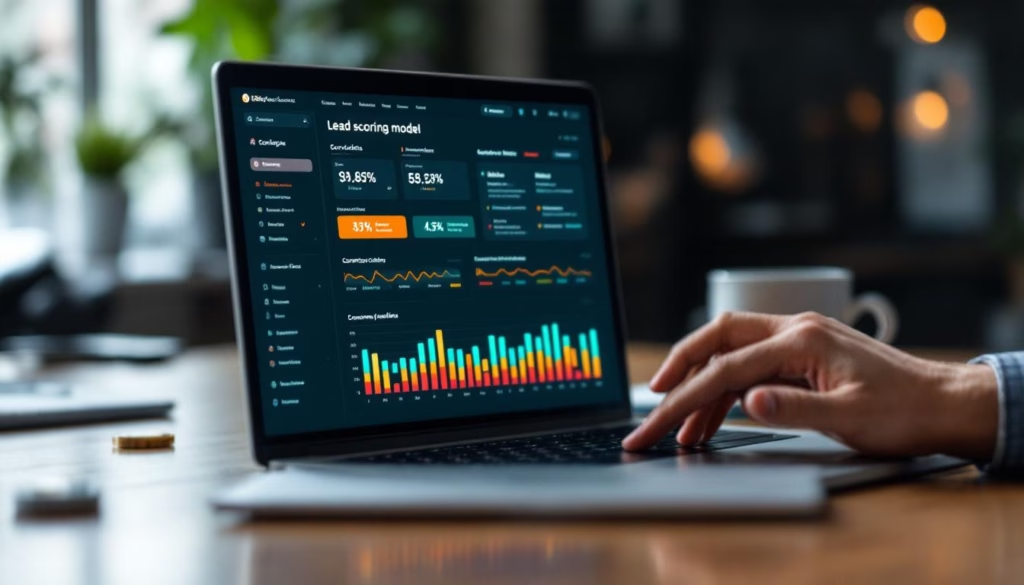
It’s also important to consider the stage the lead is at in the sales funnel. A lead who just downloaded an ebook may have a different score than one who has already requested a product demo.
This segmented approach allows for a score to be assigned that accurately reflects the likelihood of conversion, facilitating the prioritization and customization of marketing actions.
Additionally, it’s advisable to continuously monitor leads, as their interests and behaviors can change over time. For example, a lead who initially showed interest in a specific product may, after receiving additional information, develop interest in other services offered by the company. Implementing a system that allows scores to be updated regularly is key to maintaining the relevance of your marketing strategy.
Tools and technologies to automate Lead Scoring
Today, the integration of artificial intelligence into lead scoring is revolutionizing the way companies identify their most promising leads. These technologies combine human expertise with automated analysis, improving the accuracy and speed of evaluation.
Platforms like HubSpot offer solutions that automate this process, adjusting scores in real time based on user behavior and collected data. This makes it easier for marketing and sales teams to work with up-to-date and relevant information.
Automating lead scoring not only saves time, but also reduces errors and improves responsiveness to sales opportunities. Additionally, using predictive analytics tools can help anticipate leads’ needs, allowing companies to offer customized solutions before the potential customer even requests them. This not only improves the user experience, but can also significantly increase conversion rates.
Optimizing the sales funnel with lead scoring
Alignment between marketing and sales through lead scoring
One of the great advantages of lead scoring is that it improves communication and coordination between marketing and sales teams. By having a clear and objective score for each lead, both departments can work with the same criteria and priorities.
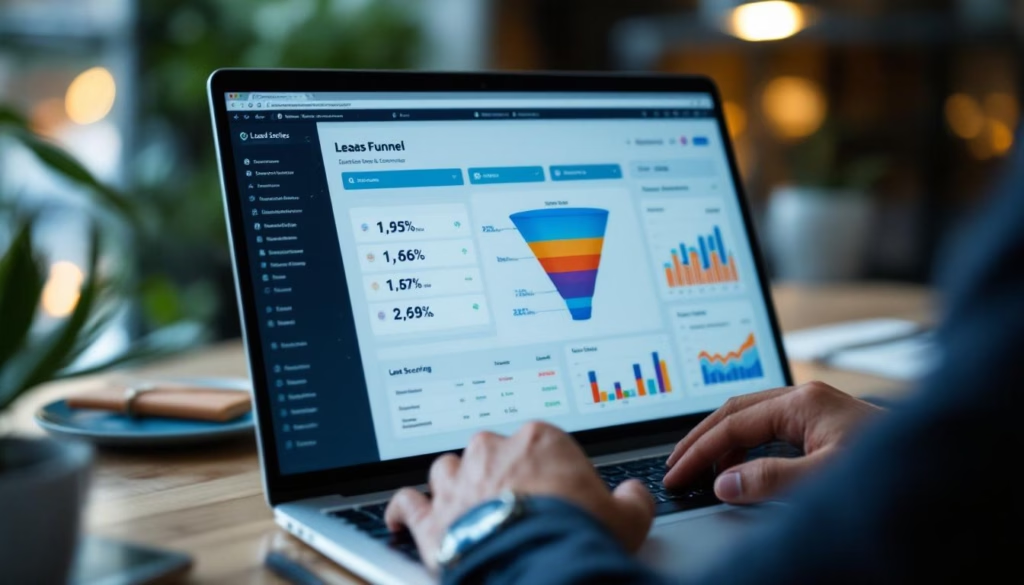
This avoids misunderstandings and ensures that the most valuable leads are addressed in a timely manner. According to an industry report, lead scoring improves the alignment between marketing and sales, resulting in a smoother and more effective sales process.
This collaboration is key to accelerating the sales cycle and increasing the closing rate.
Success stories and metrics to measure effectiveness
A 2015 study showed that using predictive lead scoring models can increase lead conversion rates by 15%. This data reflects the tangible impact this methodology has when implemented correctly.
In addition, companies that implement lead scoring report a significant reduction in acquisition costs and improved campaign efficiency. The key is to constantly measure metrics such as conversion rate, response time, and lead quality to fine-tune and optimize the system.
Lead scoring also facilitates segmentation to nurture leads based on their stage in the funnel, improving the personalization and effectiveness of communications.
To learn more about how lead scoring can transform your sales funnel, visit RD Station , where they explain how to effectively segment and nurture leads.

